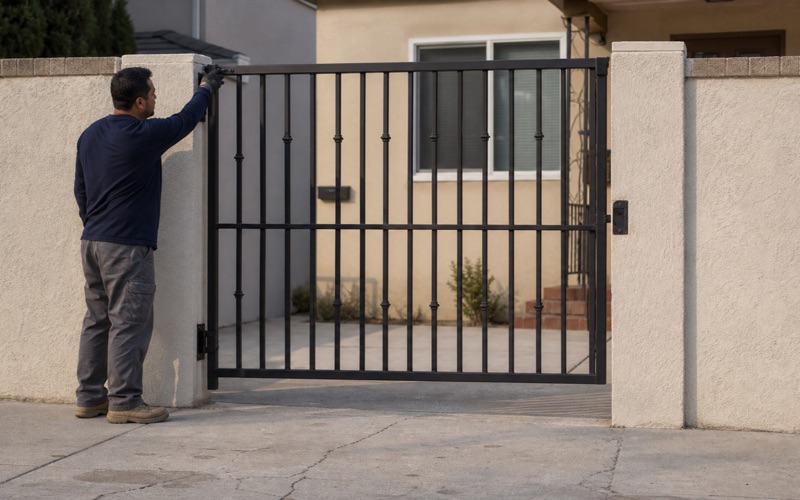
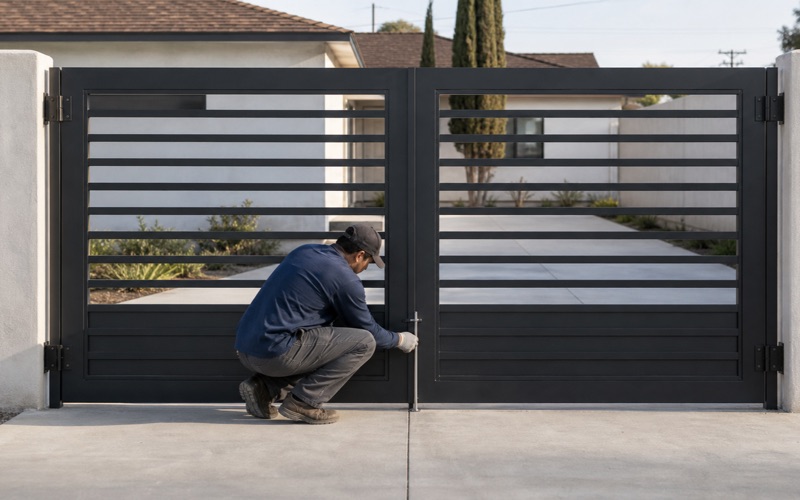
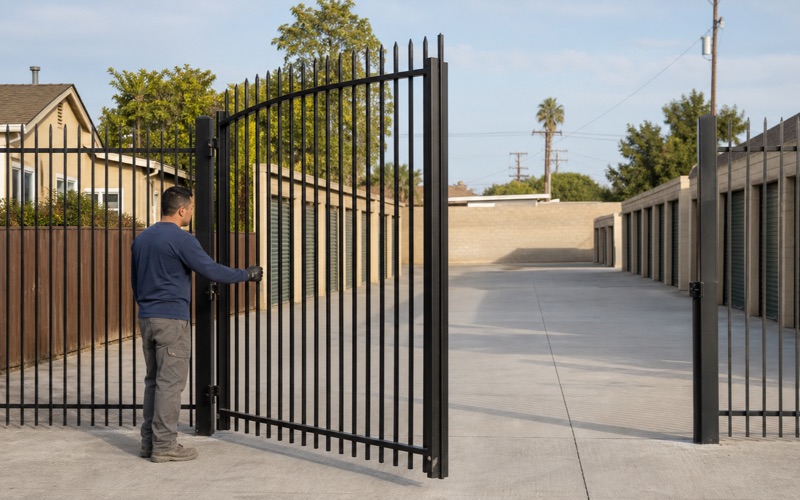
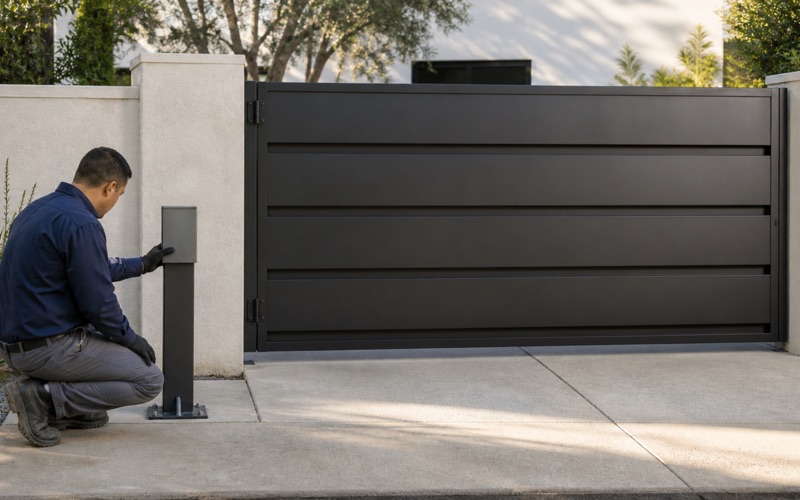
Driveway gates, security gates and gate repair, measured and permitted to Lynwood's own code before any steel is cut.
Lynwood Metal Gates designs, fabricates and installs metal gates across Lynwood, California, with more than twenty years in the trade behind every opening we take on. We cover driveway gates, security gates, automatic gate installation, access control, wrought iron and custom fabrication, and we repair gates and operators that other people put in. Most of what we do is a gate that has to fit an opening nobody measured properly the first time.
What separates a gate that lasts from one that sags in a season is almost never the styling. It is whether the leaf weight was worked out before the operator was chosen, whether the footing went as deep as the code asks, and whether anyone checked what the city permits before the design was drawn. Those are the parts nobody can see once the gate is hung, which is why we write them down.
We work for homeowners replacing a tired front gate, property managers with a community entrance that has stopped closing, and industrial sites along Long Beach Boulevard and Atlantic Avenue that need a yard secured. The scale changes and the method does not.
Metal gates designed, built and hung in Lynwood, California
Gate Repair
Repair for swing, slide and automatic gates in Lynwood, diagnosed at the cause rather than adjusted around.
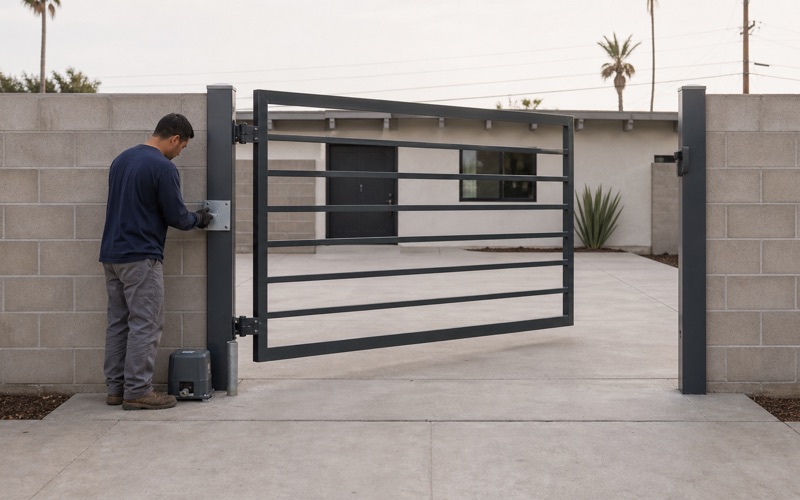
Driveway Gates
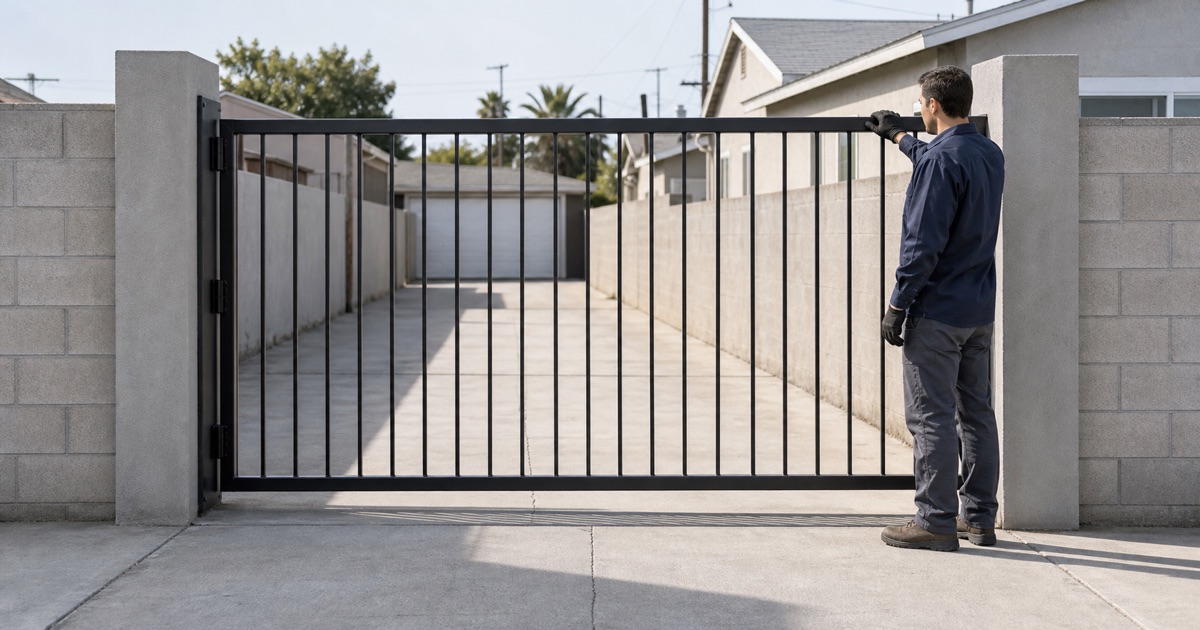
Swing, slide and cantilever driveway gates for Lynwood, measured to the opening and designed against the city's fence code.
Commercial Security Gates
Yard, storefront and perimeter security gates for Lynwood businesses, specified to the duty cycle and the code that applies.
Access Control Systems
Keypads, intercoms, telephone entry and app-based gate control installed in Lynwood, chosen to match how the entrance is used.
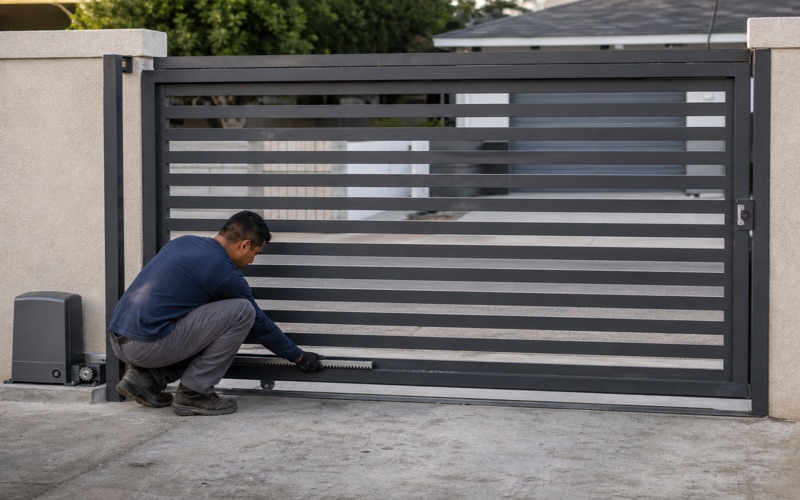
Automatic Gate Installation
Automatic gate operators installed in Lynwood, sized to the leaf they actually drive and commissioned to UL 325.
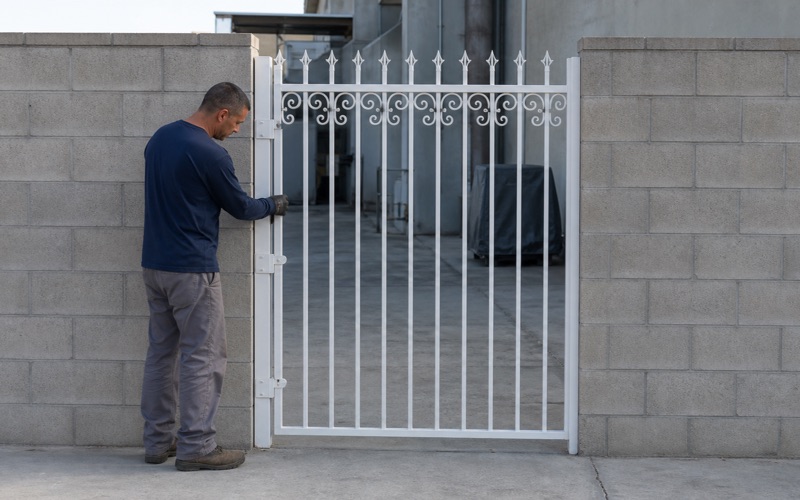
Wrought Iron Gates
Ornamental wrought iron gates for Lynwood, designed to the city's permitted materials and finished to last.
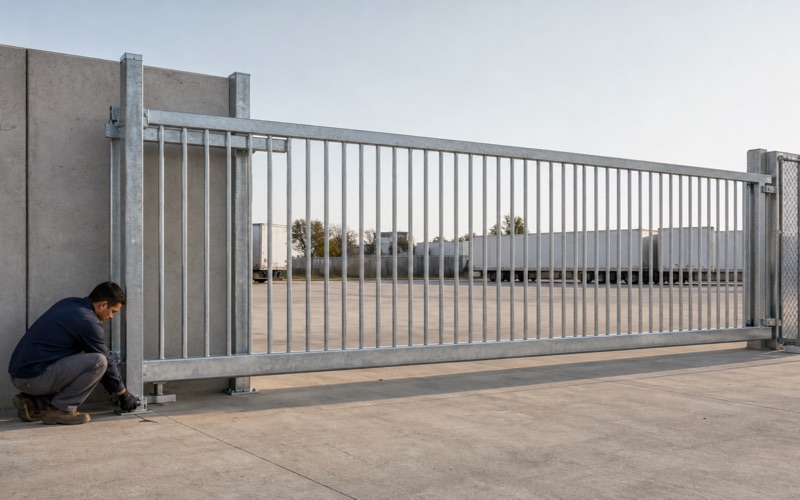
Sliding & Cantilever Gates
Cantilever and ground-running slide gates for Lynwood yards and driveways where a swing leaf will not work.
Gate Opener Repair
Repair and servicing for gate operators in Lynwood, diagnosed from the safety circuit and drive train inward.
Pool Safety Gates
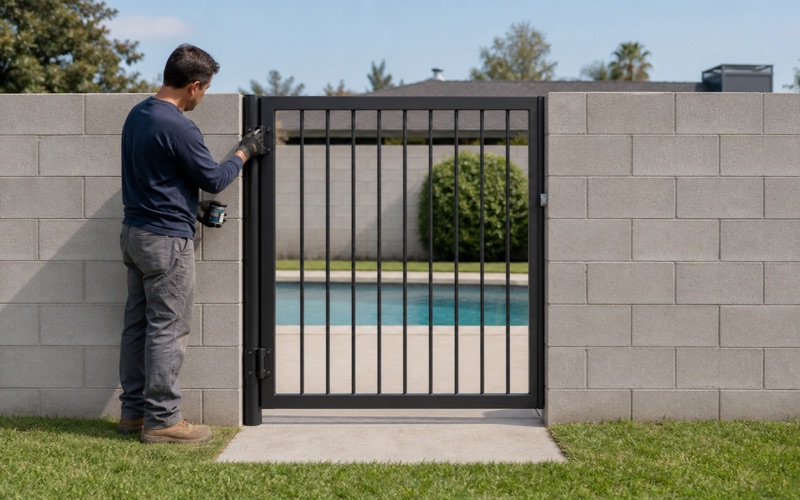
Self-closing, self-latching pool safety gates for Lynwood, built to the enclosure standard the city has adopted.
Custom Gate Fabrication
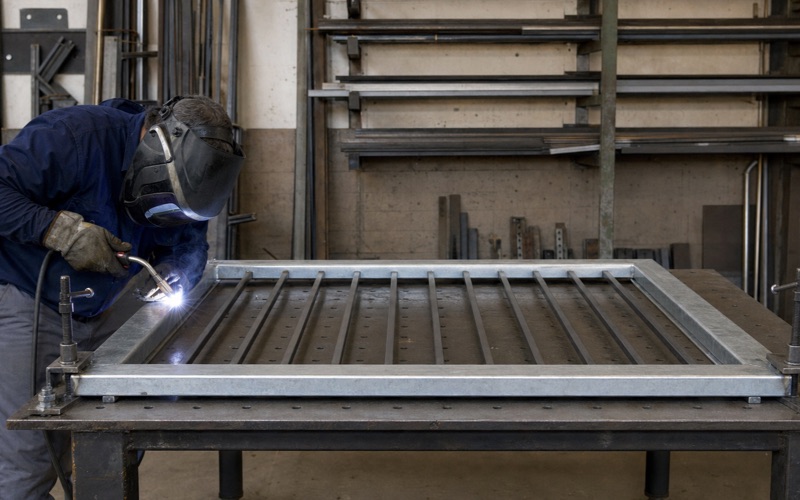
Gates drawn and fabricated to your opening in Lynwood, from a measured survey through to a tested handover.
Two Decades of Gates in One City
Twenty Years in the Trade
We have built and hung metal gates for more than twenty years, long enough to have returned to gates we installed early on and seen what held up. Our current footing depths, hinge sizing and coating sequence came from those return visits rather than from a catalogue.
A Written Record for Every Opening
Every opening we quote gets a written measurement record covering widths, grades and post positions, handed over with the finished gate. A future repair then starts from what was actually built rather than from somebody’s recollection.
Why Choose Lynwood Metal Gates
Compliant By Design
Every design is checked against Lynwood’s permitted-materials list before it is drawn, because the code here allows only wrought iron in black or white, wood or PVC picket, or block. That means a gate is compliant by construction rather than compliant by inspection, so a finished leaf is never turned away over what it is made of, rather than being redesigned on site after the money is spent.
Footings To The Printed Standard
No footing on our jobs is dug to a habit. The municipal code publishes its own construction standard, setting posts 24 inches into base soil with a concrete base four inches larger than the post in every dimension, and masonry foundations 12 to 14 inches wide depending on wall height. We dig to that and leave the excavation open for inspection before the pour, so a post cannot start leaning in its second year rather than being buried unverified.
Infill Set By The Code, Not The Rack
Lynwood tells you what an open fence may look like: material no more than 2 inches wide, spaced no less than 4 inches apart. We cut infill to those dimensions rather than to whatever section the shop had on the rack, so a picket gate passes on the first look instead of needing pickets swapped after a correction notice.
The Operator Sized To The Leaf
Never do we pick an operator from the width of an opening. Leaf weight is worked out from the finished material list, then matched against the UL 325 class the site actually falls into and the number of cycles it will see in a day, so the motor is not running at the edge of its duty rating rather than being chosen because it fitted the budget line.
Two Permits, Tracked Separately
Lynwood issues planning approval and the building permit as two separate approvals, and we track them as two. Neither is assumed to cover the other, and the abutting-owner consent or licensed survey the fence permit calls for is settled before filing, so a boundary question never surfaces after the steel is cut rather than halting a job that is already half built.
Welds Inspected Before Coating
Every load-bearing weld is dressed back and inspected before any coating goes near it, because powder coating hides the joint it is supposed to be protecting. A zinc-rich primer goes onto welded joints before topcoat, so a hinge lug cannot quietly corrode under an intact-looking finish rather than failing where nobody thought to look.
Choosing a Gate for Your Driveway
Swing or Slide: What Your Driveway Will Actually Take
A swing gate needs a clear arc it can travel through, level ground across that arc, and somewhere for the leaf to sit when it is open. A slide gate needs backrun alongside the opening instead. We measure the slope, crown and available run before recommending either, because a driveway that falls away from the street will bind a swing leaf halfway through its travel no matter how well the gate is made.
Ornamental Iron, and the Two Colors Allowed Here
Wrought iron is one of only three materials Lynwood’s code permits for a fence, and the code fixes the finish to black or white. That is narrower than most cities and it settles a question that otherwise runs on for weeks. We work the design within it, using picket profile, top detail and panel proportion to carry the character that a colour choice would carry elsewhere.
Aluminum Where a Steel Gate Would Corrode
Aluminum extrusion in 6005-T5 or 6061-T6 will not rust, which makes it the right answer for a gate that sits in constant damp, near irrigation throw, or where nobody is going to maintain a coating. It is lighter than steel for the same span, so hinges and operators see less load. The trade is that it dents where steel would shrug, so we keep it away from openings that take vehicle contact.
Arched-Top Gates for Spanish and Mediterranean Homes
An arched or radiused top reads correctly against stucco, a tile roof and a rounded entry, and it is the detail that stops a plain infill panel looking like it was bought rather than built. The arch has to be set out from the actual opening rather than bent to a standard radius. We template it on site so the curve relates to the wall it sits between.
Flat Horizontal Infill for a Clean Street Elevation
Horizontal slats give a flat, continuous elevation with no vertical rhythm, which suits a low mid-century frontage where a picket gate would look busy. Slat spacing has to respect the code’s open-material dimensions rather than being chosen purely on looks. We set the gap to satisfy both, then run the slats past the frame edge so the line reads unbroken from the street.
Low Ranch Profiles That Suit a Single-Story Block
On a street of single-story houses a tall gate reads as a wall and makes the frontage feel closed off. A lower ranch profile with a wide top rail and generous picket spacing keeps the sightline open while still closing the driveway. Within the front yard setback the code caps this at 48 inches anyway, which is close to the height that looks right on these blocks.
Powder-Coat Finishes in Matte Black and Bronze
TGIC polyester powder coating is the finish that survives sun and sprinkler overspray, and matte black and bronze are the two that hide the dust this basin puts on everything. Coating goes on after the welds are dressed and after a zinc-rich primer on the joints. Done in that order the finish is protecting bare prepared steel rather than sitting over scale.
Side-Yard Gates for RVs, Boats and Work Trucks
A side-yard gate has to clear the widest thing that will ever go through it, and people almost always measure the vehicle rather than the mirrors, the trailer tongue or the turn a driver has to make off a narrow street. We measure the approach as well as the opening. The code also requires any fence or wall to include a gate or opening no less than 30 inches wide for access to the structures behind it.
Lynwood’s Fence and Gate Rules
The Three Fence Materials Lynwood Actually Permits
Section 25-10-12 of the zoning code states that fences may only consist of wrought iron, wood or PVC picket, or block. It is a closed list rather than a set of preferences, and it rules out several materials sold as fencing at any home centre. We start every design from that list so nothing has to be unpicked later.
Why Wrought Iron Here Has to Be Black or White
The same section limits wrought iron to black or white, with no other colour permitted. Most cities regulate height and leave finish alone, so this catches people out, particularly anyone bringing a colour scheme from a previous property. We flag it at the first conversation because it is easier to design around than to discover.
Forty-Eight Inches in the Front Yard, Six Feet Behind It
Residential fences and walls are held to 48 inches within the front yard setback and 6 feet behind it, while hedges in the front are capped at 36 inches. Commercial and manufacturing property gets 8 feet behind the setback. An older Title 11 provision still shows 42 inches in front, so where a design sits between the two figures we confirm the operative one before drawing.
Picket Width and Spacing the Code Sets for You
Open fence material may be no more than 2 inches wide and spaced no less than 4 inches apart. That fixes the look of a picket or slat gate more tightly than most people expect and it is the rule most often missed on an owner-built fence. We cut to it from the outset, which also keeps the infill light enough not to load the hinges unnecessarily.
The Two Separate Permits a Lynwood Gate Needs
The zoning code requires a planning permit for all new fences in all zoning districts, and Title 11 requires a separate building permit for each fence or wall from the Building Official. They are issued by different parts of the city and one does not imply the other. We prepare and track both rather than assuming a single approval covers the work.
Notarized Neighbor Consent, and When a Survey Replaces It
The fence permit application calls for a notarized letter from all abutting landowners consenting to the fence location, or in its absence a survey from a licensed engineer delineating the property lines. Which route is realistic depends on the neighbours and on how clear the boundary already is. We work that out early, because it sits on the critical path for the whole job.
Clear Corner Areas at Driveways and Street Corners
The code sets out a clear corner area by construction rather than by height: right-of-way lines extended to their intersection, measured back 10 feet at driveways and 30 feet at streets, with nothing permitted to obstruct visibility there as judged by the city engineer. Because it names no height figure, a gate near a corner is a judgement rather than an arithmetic check, and the engineer may require a larger area.
Eight Feet of Ornamental Iron for Self-Storage Frontages
Where a personal storage use abuts a residential use, the zoning code requires an eight-foot ornamental iron fence. It is one of the few places the code specifies the material and the height together, and it means a self-storage operator has less discretion than they might assume. We build to that spec and keep the gate leaf consistent with the run either side of it.
Trash Enclosure Gates That Are Solid and Sight-Obscuring
Auto repair, used car sales, car washes and tire and upholstery uses must provide at least one trash enclosure with solid block walls on three sides and a solid, sight-obscuring gate. The code specifies material and opacity rather than a height, so the gate has to be genuinely solid rather than a slatted infill. These take more abuse than any other gate on a commercial site, so we build the frame heavier than the span alone would need.
Keeping Gates Locked on Vacant and Foreclosed Property
Lynwood’s foreclosure registration ordinance treats a property as accessible, and therefore in violation, if it can be reached through a compromised or breached gate, and it defines securing to include repairing fences and walls and chaining or padlocking gates. Violations are strict liability, with each day counting as a separate offence and weekly inspections required of out-of-area owners. We handle the repair and securing work that keeps a registered property compliant.
Openers, Keypads and Gate Access
Choosing an Operator Class for Your Cycle Count
UL 325 classifies gate operators from Class I for a single-family residence through to Class IV for restricted-access industrial sites, and the class carries duty expectations with it. A community entrance cycling two hundred times a day is a different machine from a driveway gate cycling six. We count the real cycles and size from that rather than from the gate’s dimensions.
Solar Gate Operators Where There Is No Power Run
A solar operator with battery backup removes the trench, the conduit and the electrician from a gate that sits a long way from the panel. The constraint is energy rather than force: the panel and battery have to cover the cycles plus the days without sun. We size the array to the duty cycle instead of fitting a standard kit and hoping.
Entry by Keypad, Intercom or Phone Line
A keypad suits a household with a handful of codes, an intercom a property where someone is always there to answer, and telephone entry a building where they are not. Each fails differently in weather and daily use, so we specify from how the entrance is actually used rather than fitting the same unit everywhere.
Letting People In From Your Phone
Cellular and app-based controllers let you see who is at the gate and open it from anywhere, which is what most people actually want when they ask for a smart gate. They depend on signal at the gate and on a subscription staying live. We check coverage at the post before specifying one, because a controller with one bar is worse than a keypad.
Safety Loops, Photo Eyes and Edge Sensors
Inductive loop detectors cut into the drive surface handle exit, safety and shadow functions, while photo eyes and safety edges catch what is in the gate’s path. They are not interchangeable: a loop sees a vehicle and a photo eye sees a child. We install the combination the site needs rather than the minimum that will let the operator run.
What UL 325 Requires of a Powered Gate
The standard requires monitored external entrapment protection, meaning the operator continuously supervises its safety devices and refuses to move if one is missing or faulty. ASTM F2200 covers the gate’s own construction so it cannot shear or trap. Together they are why a gate designed to be pushed by hand is not automatically a candidate for an operator.
Automating a Gate That Was Built to Be Pushed
Retrofitting an operator is common and it is where most of the automation failures we get called to began. A manual leaf often has hinges, a post and a frame sized only for a hand pushing it. We weigh the leaf and check the post and hinges first, and where the gate will not carry an operator we say so before the money is spent.
Getting Emergency Crews Through a Locked Entrance
A Knox box or a fire department key switch gives crews entry without cutting the gate, and the California Fire Code’s fire apparatus access requirements govern the widths and clearances behind it. This is far cheaper designed in than retrofitted after a plan check comes back. We raise it at design stage on any gated access a fire engine would need to use.
Fault Finding, Wear and Site Security
Dead Gate: No Response From the Opener at All
A gate that does nothing at all is usually power, a tripped safety device or a controller that has lost its program, rather than a failed motor. Because UL 325 operators refuse to run with a fault on a monitored safety input, a dirty photo eye presents as a completely dead gate. We check the safety circuit before anyone starts pricing an operator.
The Operator Hums and Nothing Travels
When the motor runs but the leaf stays put, the drive is disconnected from the gate somewhere: a sheared key, a worn gear rack, a slipped chain, or a manual release still disengaged from the last power cut. On a slide gate it can also be a wheel seized to the point where the operator simply cannot move it. We find the break in the drive train rather than turning the force up.
Sagging Leaves, Dragging Gates and Worn Rollers
A swing leaf that drags has usually lost its hinge geometry, either because the hinges were undersized or because the post has moved. On a slide gate the same symptom comes from worn V-track rollers or debris in the track. We correct the cause rather than packing the latch, because a gate adjusted to a sagged position simply sags further.
Corroded Frames Brought Back Instead of Replaced
Corrosion concentrates at the bottom rail and the base of each picket where water sits, and that is repairable: the affected section is cut out and let in, then primed with zinc-rich primer and recoated. Replacement only makes sense once the frame corners have opened or the sections have lost real wall thickness. We assess the frame and post before recommending either.
When the Remote or the Keypad Stops Working
Intermittent remotes are usually a receiver aerial, interference, or a battery under load rather than the transmitter itself. Keypads more often fail at the wiring entry, where water tracks down the conduit into the terminals. We test the receiver and the entry rather than pairing a new remote and hoping the fault does not come back.
Community Gates for Apartment and HOA Property
A shared entrance takes more cycles in a month than a household gate takes in a year, so hardware that is adequate on a driveway is consumable here. Duty rating, monitored entrapment protection, a serviceable access-control list and a documented manual release all matter more than styling. We specify for the cycle count and leave the board a written handover they can give the next manager.
Cantilever Gates Spanning a Yard Entrance
A cantilever slide gate carries its own weight on truck assemblies set back from the opening, with no wheel running on the ground, which suits a yard where a track would fill with debris or where the drive is uneven. The counterbalance tail needs real room behind the opening. We check the available backrun and the ground it runs over before proposing one.
Scissor and Roll-Down Security for Shopfronts
Scissor and side-folding gates fold back clear of a glazed shopfront and close it off after hours, while a roll-up rolling steel door closes a service opening or a loading bay outright. Which one fits depends on where the stack sits when the shop is open. We survey the reveal and the head clearance first, because retrofitting either into a finished frontage is where the cost hides.
Areas We Serve
Lynwood Metal Gates provides metal gates throughout the greater Lynwood area, with the same crews and the same standards on every job.
Metal Gates in Huntington Park
Metal Gates Services in Maywood
Montebello Metal Gates
Metal Gates in Hawthorne
Metal Gates Services in Lawndale
Monterey Park Metal Gates
Metal Gates in Alhambra
Metal Gates Services in Rosemead
Redondo Beach Metal Gates
Metal Gates in Culver City
Metal Gates Services in Manhattan Beach
San Gabriel Metal Gates
Good to know
Frequently Asked Questions
Do I need a permit to put a gate on my driveway in Lynwood?
Yes, and in Lynwood it is usually two permits rather than one. The zoning code requires a planning permit for all new fences in every zoning district, including block walls, and Title 11 separately requires a building permit for each fence or wall from the Building Official. The planning application wants a plot plan and an elevation plan giving materials and every dimension. We prepare and track both, because one does not stand in for the other.
Why does Lynwood ask for a notarized letter from my neighbors?
The fence permit application asks for a notarized letter from all abutting landowners consenting to the fence location, and accepts a licensed engineer's survey of the property lines where that letter cannot be obtained. It exists because a fence built a few inches over a boundary is expensive to move. We settle which route applies before filing, not after the steel is cut.
How tall can a gate be in a Lynwood front yard?
The zoning code limits fences and walls within the front yard setback to 48 inches and allows 6 feet behind it in residential districts, with hedges held to 36 inches in front. Commercial and manufacturing property gets 8 feet behind the setback. An older Title 11 provision still prints 42 inches, so where the two disagree we confirm the operative figure with the Planning Division first.
What materials is a gate allowed to be made of here?
Lynwood's code is unusually specific: fences may only consist of wrought iron in black or white, wood or PVC picket, or block. Chain link, barbed wire, razor wire, fiberglass, corrugated plastic and gypsum board are prohibited outright, and no electrically charged fence is permitted anywhere in the city. That is why we settle material and finish at design stage rather than at inspection.
What drives the price of a metal gate?
Four things move the number more than anything else: the clear width of the opening, whether the gate swings or slides, the weight of the finished leaf, and whether it is powered. A slide gate needs track or cantilever counterbalance a swing gate does not, and an operator has to match the actual leaf weight and cycle count. We price against the finished material list rather than a square-foot rule of thumb.
Can a rusted wrought iron gate be repaired, or does it need replacing?
Most can be repaired. Corrosion concentrates at the bottom rail and the foot of each picket where water sits, and that is usually a section to cut out and let in rather than a reason to scrap the leaf. Replacement makes more sense once the frame corners have opened, the sections have lost real wall thickness, or the hinges have torn out of a failing post.
What is UL 325 and why does it matter for an automatic gate?
UL 325 is the safety standard for automatic gate operators, sorting gates into Class I through Class IV by where they are used. It requires monitored external entrapment protection, meaning photo eyes or safety edges the operator continuously checks and refuses to run without. ASTM F2200 covers how the gate itself is built so it cannot trap or shear. Both matter because an operator on a gate never designed for one is where injuries happen.
Can you automate a gate I already have?
Often, but it depends on the gate rather than the opener. A leaf built to be pushed by hand may have hinges, a post and a frame never sized for the loads an operator applies, so adding a motor accelerates the failure instead of solving it. We weigh the leaf and check the hinge and post before quoting an operator.
What certifications should I look for in a gate installer?
In California the two relevant contractor classifications are CSLB D-28 for doors, gates and activating devices, and CSLB C-13 for fencing. On the automation side, the Institute of Door Dealer Education and Accreditation certifies technicians on automated gate systems, and dealer accreditation is separate from individual certification. Ask which classification the licence actually carries.
How long does a gate job take from order to handover?
The fabrication is rarely the long pole. Permitting is, because Lynwood issues planning approval and the building permit separately and the application needs the consent letter or survey in hand first. Footings then need to cure before a leaf is hung, and a powered gate needs setting and testing after that. We give a schedule that separates the permit window from the build.
Ready to Get Started?
Request a free quote today and we'll get back to you fast.